
Managed Email Failover and Continuity Services for Toronto Businesses
Keep Your Business Email Running, Even When Your Email Provider Isn't
What happens when Microsoft 365, Google Workspace, or another email provider experiences an outage? For many businesses, email comes to a standstill, disrupting communication with customers, employees, and business partners.
With managed email failover and continuity services from Sentryon, your business doesn't have to go offline just because your email provider does.
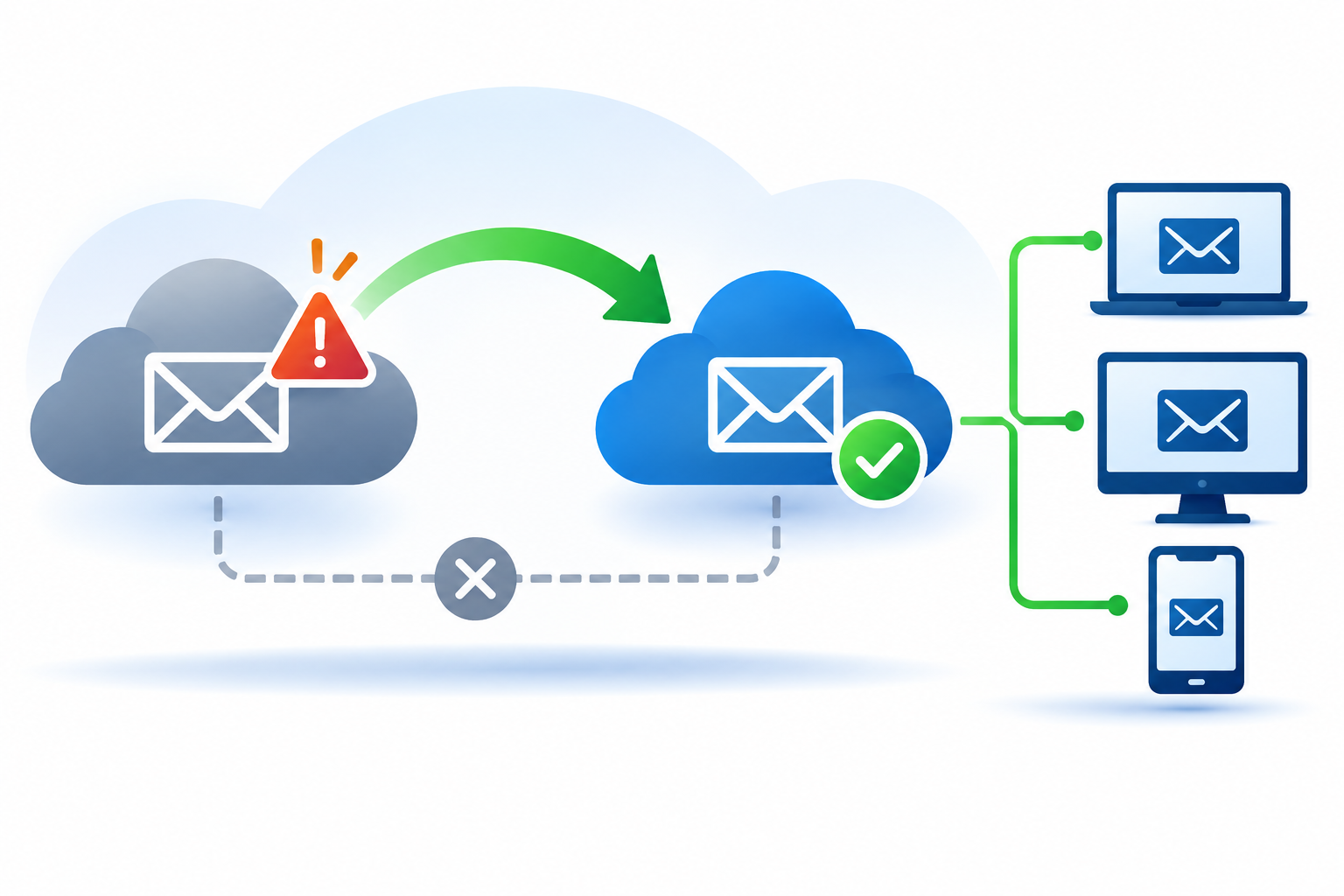
Our email continuity solutions provide a reliable backup when your primary email service becomes unavailable. Incoming messages can be securely routed to an alternate system, allowing you to maintain access to important communications and keep business moving while the primary service is restored.
Stay Connected When It Matters Most
- Protection Against Outages: Maintain email availability when Microsoft 365, Google Workspace, or other hosted email platforms experience service disruptions.
- Backup Email Access: Access an alternate email environment so your team can continue communicating during an outage.
- No Missed Messages: Help ensure important incoming communications aren't lost when your primary email platform is unavailable.
- Business Continuity: Minimize downtime, reduce disruption, and keep your employees productive.
Don't Let an Email Outage Disrupt Your Business
Email is too important to your daily operations to leave its availability to chance. Sentryon can help protect your business from unexpected email service interruptions with dependable failover and continuity solutions.
Contact Sentryon today to learn how to keep your business connected, even when your email provider goes down.
Frequently Asked Questions About Email Failover & Continuity
1. What is email failover and continuity?
Email failover and continuity is a service that helps businesses maintain access to email communications when their primary email provider experiences an outage. If services like Microsoft 365 or Google Workspace become unavailable, a backup email environment allows users to continue accessing and responding to important messages until normal service is restored.
2. How does email failover work?
Email failover solutions use an alternate email environment to help maintain email availability during an outage. When your primary email provider becomes unavailable, incoming messages can be redirected to a backup system. Employees can then access their messages through an alternate interface or webmail platform, depending on the solution. Once the primary service is restored, messages can be synchronized back to the primary environment where supported.
3. Does email continuity work with Microsoft 365 and Google Workspace?
Yes. Email continuity solutions are available for businesses using popular cloud email platforms, including Microsoft 365 and Google Workspace. This provides an additional layer of protection against service interruptions affecting either platform.
4. Will employees still be able to send and receive emails during an outage?
Yes. One of the primary benefits of email continuity is allowing employees to continue sending and receiving messages through an alternate email environment while their primary provider is unavailable. This helps businesses maintain communication with customers, vendors, and employees during unexpected disruptions.
5. What happens to emails received during an outage?
Incoming messages can be captured and stored by the continuity service while the primary email platform is unavailable. Depending on the solution, these messages can subsequently be synchronized or delivered to the primary mailbox once service is restored, helping prevent important communications from being missed.
6. Is email failover the same as email backup?
No. Email backup and email continuity serve different purposes. Email backup focuses on protecting and recovering historical email data in the event of accidental deletion, corruption, or data loss. Email continuity focuses on maintaining access to email communications during an outage or service disruption. Both are important components of a comprehensive business continuity and disaster recovery strategy.
7. How long does it take to switch to backup email?
The time required to activate email failover depends on the continuity solution and how it is configured. Many solutions can automatically redirect incoming messages when an outage is detected, while others may require some manual intervention. Having a properly configured solution in place ahead of time helps minimize disruption.
8. Why should my business have email continuity protection?
Email is essential to nearly every business operation. An extended email outage can delay customer responses, interrupt internal communications, disrupt transactions, and impact productivity. Email continuity helps reduce these risks by providing an alternate way to communicate when your primary email provider is unavailable.
- What is email failover and continuity?
Email failover and continuity is a service that helps businesses maintain access to email communications when their primary email provider experiences an outage. If services like Microsoft 365 or Google Workspace become unavailable, a backup email environment allows users to continue accessing and responding to important messages until normal service is restored. - How does email failover work?
Email failover solutions use an alternate email environment to help maintain email availability during an outage. When your primary email provider becomes unavailable, incoming messages can be redirected to a backup system. Employees can then access their messages through an alternate interface or webmail platform, depending on the solution. Once the primary service is restored, messages can be synchronized back to the primary environment where supported. - Does email continuity work with Microsoft 365 and Google Workspace?
Yes. Email continuity solutions are available for businesses using popular cloud email platforms, including Microsoft 365 and Google Workspace. This provides an additional layer of protection against service interruptions affecting either platform. - Will employees still be able to send and receive emails during an outage?
Yes. One of the primary benefits of email continuity is allowing employees to continue sending and receiving messages through an alternate email environment while their primary provider is unavailable. This helps businesses maintain communication with customers, vendors, and employees during unexpected disruptions. - What happens to emails received during an outage?
Incoming messages can be captured and stored by the continuity service while the primary email platform is unavailable. Depending on the solution, these messages can subsequently be synchronized or delivered to the primary mailbox once service is restored, helping prevent important communications from being missed. - Is email failover the same as email backup?
No. Email backup and email continuity serve different purposes. Email backup focuses on protecting and recovering historical email data in the event of accidental deletion, corruption, or data loss. Email continuity focuses on maintaining access to email communications during an outage or service disruption. Both are important components of a comprehensive business continuity and disaster recovery strategy. - How long does it take to switch to backup email?
The time required to activate email failover depends on the continuity solution and how it is configured. Many solutions can automatically redirect incoming messages when an outage is detected, while others may require some manual intervention. Having a properly configured solution in place ahead of time helps minimize disruption. - Why should my business have email continuity protection?
Email is essential to nearly every business operation. An extended email outage can delay customer responses, interrupt internal communications, disrupt transactions, and impact productivity. Email continuity helps reduce these risks by providing an alternate way to communicate when your primary email provider is unavailable.
You must be logged in to post a comment.